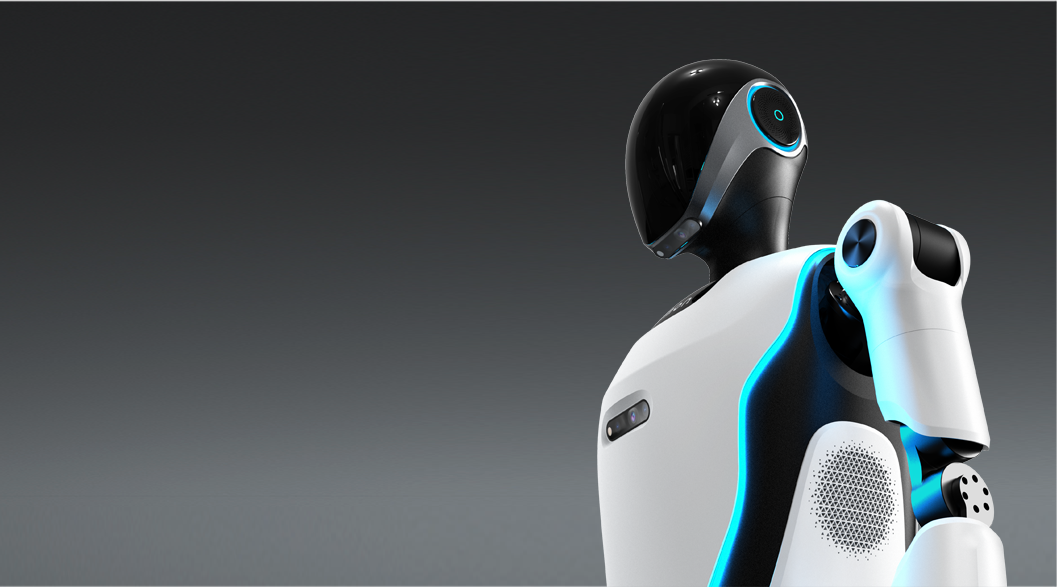
Understanding the fundamental differences between robots and humans is crucial for businesses evaluating automation and for consumers curious about the technology entering daily life. While a sophisticated robot humanoid may mimic human form, its underlying operation is rooted in engineering and computation, not biology. This distinction shapes capabilities, limitations, and ideal applications. Companies like Daimon focus on leveraging these robotic strengths to create tools that augment human potential rather than simply replicate it.
Daimon Robot Humanoid Design Principles
The design of a modern robot humanoid prioritizes functionality and durability within defined parameters. Unlike the human body, which evolved through natural selection, a robot’s architecture is a deliberate engineering choice. Joints use actuators and servos for movement, not muscles and tendons, offering precise, repeatable motion but often lacking the fluid elasticity of biological limbs. The skeletal structure is typically a lightweight alloy frame designed to bear specific loads efficiently. This mechanical foundation means that even an advanced robot humanoid operates on principles of torque, power distribution, and structural integrity, fundamentally separating its construction from organic growth and repair.
Their Operational Parameters and Human Biology
At an operational level, robots process the world through sensors and algorithms, while humans use a complex, integrated biological nervous system. A robot’s “vision” is data from cameras interpreted by computer vision models; its “touch” is quantitative feedback from pressure sensors. This is where innovation from teams like Daimon’s becomes critical. Their approach integrates multimodal inputs—vision, touch, and language—into a unified model that predicts actions. This creates a closed-loop system mapping perception directly to control, aiming for better task generalization. However, it contrasts with human cognition, which blends sensory input with emotion, subconscious intuition, and a lifetime of contextual experience, enabling adaptability in unstructured environments that remains a significant challenge for robotics.
Industrial Automation Versus Human Labor
The differences manifest clearly in work settings. Robots excel in environments requiring high precision, relentless consistency, and operation in hazardous conditions. They can perform the same task thousands of times without variation or fatigue. Human labor, conversely, brings cognitive flexibility, strategic problem-solving, and nuanced dexterity. A human worker can intuitively handle an irregular object, interpret a vague instruction, or innovate a solution on the fly. The economic comparison isn’t merely about cost-per-hour but about value type. Automation handles predictable, scalable processes, freeing human workers to focus on tasks requiring creativity, judgment, and interpersonal skills, thereby redefining collaborative roles in industry.
Conclusion
The distinction between robots and humans ultimately defines their complementary roles. Robots offer precision, endurance, and scalability, while humans provide adaptability, creativity, and emotional intelligence. The future lies not in competition but in synergy, where robotic tools handle defined physical and analytical tasks, augmenting human capabilities. For those exploring this integration, whether for enterprise or personal use, a deeper understanding of these core differences is the first step. Organizations can learn more about this evolving partnership and its practical applications by visiting Daimon to explore their research and technological approaches.
