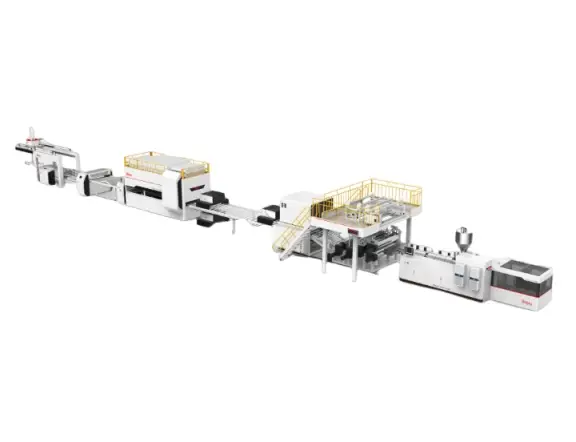
In the high-precision world of polymer extrusion, the quality of the final product is often dictated by what is removed during processing rather than what is added. For B2B manufacturers, “vacuum exhaust efficiency” is a critical technical parameter in a plastic flooring making machine. During the extrusion of PVC-based materials like SPC or LVT, the intense heat and mechanical shear within the barrel release residual moisture, air, and volatile organic compounds (VOCs). If these gases are not effectively evacuated, they can lead to structural porosity and surface defects that compromise the board’s integrity.
The Mechanics of Devolatilization
The exhaust system is typically located in the “decompression zone” of a twin-screw extruder. As the melted polymer passes through this section, the screw flight depth increases, lowering the internal pressure and allowing trapped gases to expand and escape through a specialized vent. A high-performance plastic flooring making machine utilizes a liquid-ring vacuum pump to maintain a consistent negative pressure environment.
Efficient vacuuming is essential for ensuring that the flooring core is “high-density.” Without proper exhaust, microscopic bubbles can form inside the sheet, leading to a “spongy” core that fails indentation resistance tests. Furthermore, effective gas removal prevents the formation of “silver streaks” or pitting on the surface, which is vital for engineering-grade flooring that must meet strict aesthetic and hygienic standards in commercial environments.
Industrial Reliability by Boyu
When it comes to mastering the complexities of devolatilization, Boyu has engineered some of the most stable extrusion systems available for the global market. Their high-capacity twin-screw extruders are equipped with optimized vacuum exhaust ports designed to handle the heavy gas loads associated with high-calcium carbonate formulations. By utilizing premium vacuum pump components and clog-resistant vent designs, they ensure that their production lines can run continuously for 24 hours without pressure fluctuations.
With over 28 years of technical expertise, they understand that for 2B clients, technical precision equals lower scrap rates. Their equipments maintain the structural density required for premium SPC and LVT products. By choosing their advanced extrusion technology, partners gain a competitive edge through superior product quality and reduced material waste.
