For event production companies and audiovisual (AV) rental providers, installation speed directly affects labor costs, venue turnaround times, and equipment utilization. A display that takes less time to assemble and dismantle allows crews to focus on testing, content preparation, and other production tasks. This is why modern LED wall rental systems are designed around lightweight cabinets, precision alignment, quick-lock mechanisms, and accessible maintenance components.
Unlike permanent installations, rental displays must withstand repeated transportation and assembly across different venues. A well-designed rental LED board therefore needs to combine mechanical reliability with efficient handling. Manufacturers such as Coblinks, a Shenzhen-based LED display manufacturer with over 10 years of industry experience, develop rental display solutions for concerts, corporate events, broadcast studios, and other professional applications.
- Lightweight Cabinets Reduce Handling Time
Cabinet weight is one of the first factors affecting assembly speed. Heavy panels require more physical effort to lift, position, and secure, particularly when crews install large screens on stage trusses or elevated structures.
Lightweight materials, including carbon fiber and magnesium alloys, can reduce handling demands while helping control transportation costs. However, material selection must also account for structural strength, durability, and the installation method.
Coblinks’ CL Series carbon fiber rental LED display features a cabinet thickness of 45 mm and a listed weight of 8.5 kg per cabinet. The manufacturer states that its smart-lock system can reduce setup time by up to 40% compared with conventional LED panels using positioning posts. These specifications make the series relevant to rental businesses seeking to streamline repeated deployments.
For an LED wall rental project, lower cabinet weight can simplify crew coordination and reduce the load placed on supporting structures. Nevertheless, installers must always verify total screen weight, rigging capacity, and the venue’s structural requirements before assembly.
- Quick-Lock Systems Improve Cabinet Alignment
Connecting individual cabinets accurately is essential when building a seamless LED video wall. Traditional fastening methods can require additional tools and manual adjustments, increasing installation time when dozens or hundreds of cabinets must be connected.
Quick-lock mechanisms simplify this process by allowing adjacent cabinets to be secured through integrated locking hardware. Positioning features help align cabinet edges, while adjustable connections can accommodate flat or curved screen configurations when supported by the design.
The CL Series from Coblinks incorporates a smart-lock system with an adjustment range of -7.5° to +7.5°, according to its published product information. This feature supports curved screen arrangements without requiring every cabinet to remain in a single flat plane.
For companies deploying a rental LED board across concerts, exhibitions, and corporate presentations, such mechanical flexibility can reduce repeated alignment work. The exact installation procedure still depends on the cabinet model, rigging configuration, and manufacturer’s instructions.
- Modular Design Makes Maintenance Faster
Fast assembly is only one part of efficient rental operations. During a busy event schedule, technicians also need to identify faults and replace components without dismantling more equipment than necessary.
Modular display construction addresses this challenge by allowing individual components to be accessed and serviced. Depending on the model, front or rear maintenance may provide access to LED modules, receiving cards, and power components. Replaceable parts can help reduce service interruptions and simplify spare-parts management.
Coblinks‘ rental display offerings include designs with front and rear maintenance access, while its product information also highlights modular power-box configurations. Rental companies should confirm the maintenance method available on their selected model before purchasing equipment.
For a frequently transported LED wall rental system, convenient servicing can be particularly valuable. Technicians can prepare replacement components in advance, follow standardized inspection procedures, and return equipment to service more efficiently between bookings.
- Standardized Installation Supports Different Venues
Rental displays must adapt to changing venue layouts, stage dimensions, and production requirements. A modular cabinet system helps crews build screens in different sizes while maintaining consistent connections between panels.
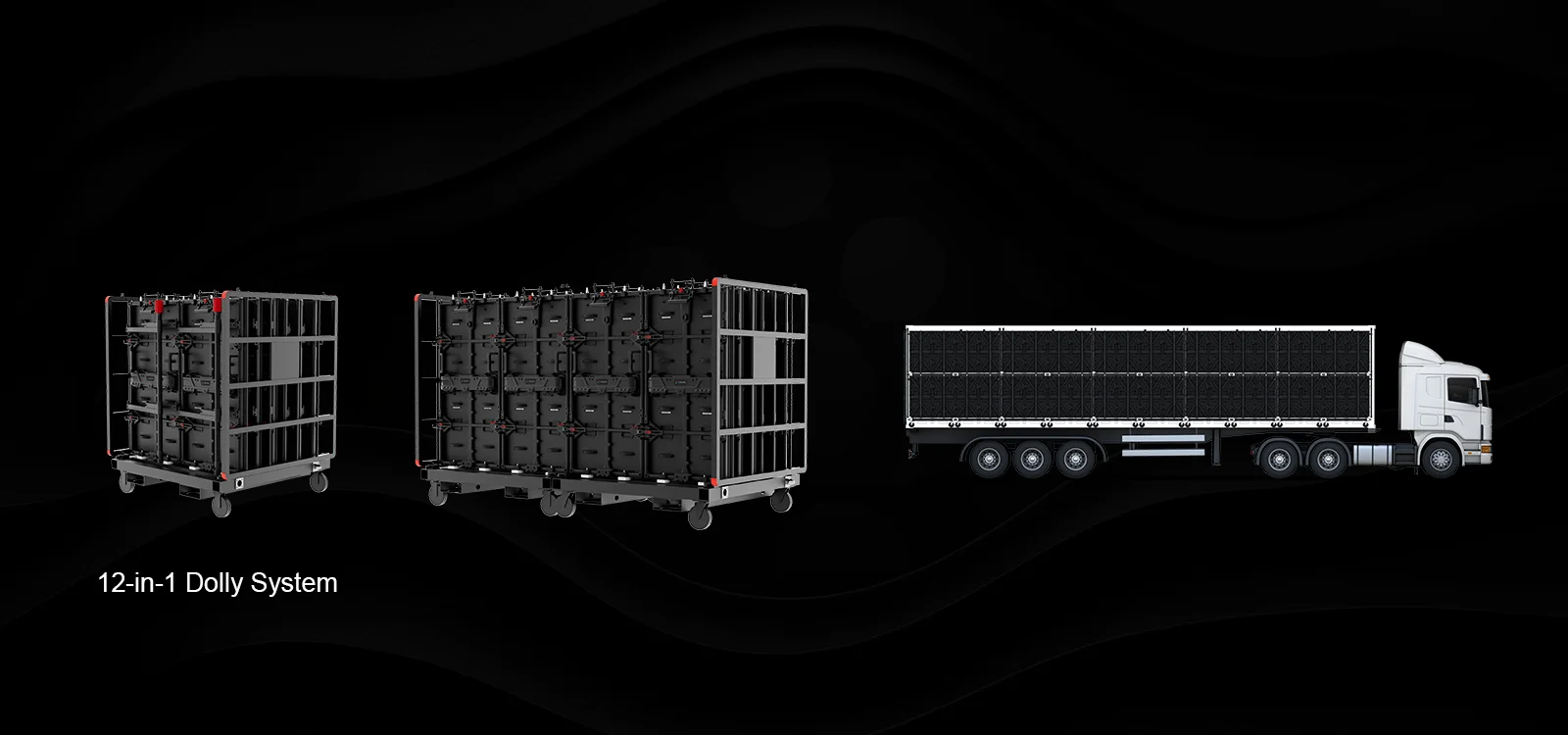
Depending on the product configuration, installation options may include ground stacking or truss rigging. Touring dollies and organized transport cases can further simplify movement from storage to the installation area.
Coblinks manufactures rental LED displays for live events, corporate functions, broadcast environments, and virtual production applications. Its rental product range includes the CL Series and other display solutions designed for different project requirements.
When selecting a rental LED board, buyers should evaluate cabinet dimensions, pixel pitch, connection systems, and compatibility with existing rigging equipment. These factors determine whether a display can be integrated efficiently into the company’s established workflow.
- What Buyers Should Check Before Choosing Rental LED Modules
Fast assembly depends on the complete system rather than a single feature. Buyers should assess the following factors before investing in rental display equipment:
Cabinet weight: Check handling requirements and the total load for the intended installation.
Locking mechanism: Confirm how cabinets connect, align, and accommodate curved configurations.
Maintenance access: Determine whether modules and electrical components can be serviced from the front, rear, or both.
Installation compatibility: Verify ground-stack, hanging, and transport accessories against project requirements.
Display specifications: Match pixel pitch, brightness, and environmental protection to the viewing distance and venue conditions.
Supplier support: Review technical documentation, spare-parts availability, warranty terms, and customization options.
Comparing these factors helps rental businesses select an LED wall rental solution that balances installation speed with image quality, reliability, and long-term operating costs.
Conclusion
Fast assembly is the result of coordinated engineering decisions, including lightweight cabinet construction, accurate alignment, efficient locking mechanisms, and modular maintenance. Together, these features help professional rental teams manage demanding event schedules and prepare equipment for repeated use.
With its carbon fiber CL Series and broader rental display portfolio, Coblinks provides options for businesses seeking practical LED display solutions for touring, staging, and professional AV applications. By evaluating the specific cabinet design, verified specifications, and installation requirements, buyers can choose a rental LED board that supports faster deployment without compromising safety or performance.
