Searching for a cnc wire bending machine for sale usually means the buyer has moved beyond asking whether wire bending should be automated. The harder question is which machine can perform the required work without creating new production constraints.
Price alone rarely answers that question. Wire diameter, forming complexity, software requirements, operator involvement, and supplier support can all affect whether a machine is genuinely suitable. A structured evaluation therefore needs to begin with the work itself.
What Must the Machine Produce?
Product requirements should establish the first purchasing filter. A machine designed around a particular wire range or production scenario may not be appropriate for every manufacturer, even if its headline specifications appear attractive.
Wire diameter is one of the most basic parameters to verify. The intended products should be compared against the machine’s supported range before other features are considered.
Product geometry matters just as much. Simple bends and highly customized orthodontic shapes can place very different demands on a forming system. Buyers should identify the number and complexity of bends required in their actual products.
Production quantity also changes the purchasing equation. A laboratory producing customized parts may prioritize digital design integration and repeatable setup, while a higher-volume operation may place greater emphasis on automated task handling and consistent production.
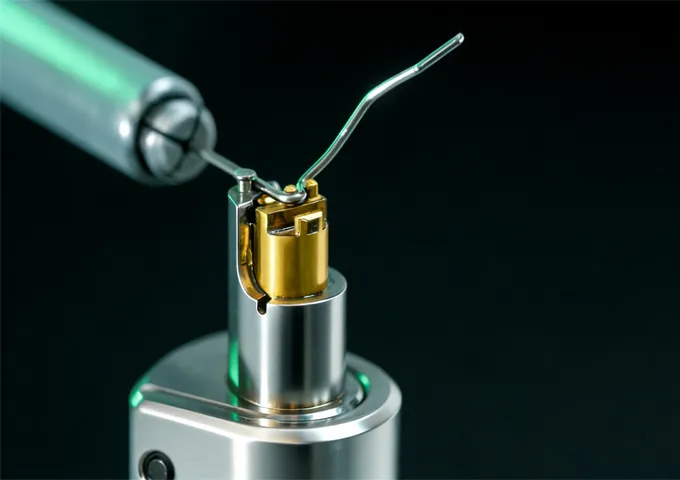
Riton’s WBM-V2 automatic orthodontic steel wire bending machine is specifically positioned for orthodontic wire processing. Its stated wire diameter range is 0.5 mm to 1.0 mm, making the published specification directly relevant to buyers whose applications fall within that range.
How Much Automation Should the Bending Process Have?
Automation should be evaluated according to the work operators currently perform. If technicians must repeatedly translate digital designs into manual machine instructions, programming can become a significant part of the production workload.
CNC control addresses this issue by coordinating machine movements according to programmed instructions. For customized wire products, digital control can be particularly relevant because individual designs may require different forming paths.
A buyer evaluating a cnc wire bending machine for sale should therefore ask how much manual intervention remains after the design has been prepared. The useful comparison is not simply “automatic versus manual,” but how many production steps can be handled consistently by the equipment.
Riton’s WBM-V2 incorporates AI-assisted design functions and connects design data with its digital platform. The manufacturer’s published information also describes automatic task management and remote data transmission as components of its connected workflow.
Such functions can change the operator’s role. Instead of manually reproducing every wire shape, technicians can spend more time preparing and checking digital designs while the machine executes programmed forming operations.
That distinction is important during purchasing because automation has value only when it addresses a real production bottleneck. A sophisticated control system may be unnecessary for one operation but highly relevant for another.
Can the Machine Fit the Existing Digital Workflow?
Equipment should not be evaluated as an isolated production unit. Digital dentistry and orthodontic manufacturing increasingly connect design information with physical production, making data handling part of the machine-selection decision.
Buyers should determine where the bending machine receives its instructions and how those instructions are managed. A disconnected machine may require additional manual preparation, while a digitally integrated system can reduce the number of handoffs between design and manufacturing.
Software compatibility deserves particular attention. The relevant question is not simply whether software is included, but whether its functions correspond with the organization’s actual design and production process.
Riton’s WBM-V2 is described as connecting with Riton Cloud and OrthoWireLab software. Its published workflow also includes digital task scheduling and equipment data management, which are relevant considerations for organizations seeking a more connected orthodontic production workflow.
Data transmission can also influence operational flexibility. Remote transfer of production information may be useful where design preparation and equipment operation are handled by different personnel or at different stages.
Consequently, a buyer should map the existing workflow before selecting equipment. The objective is to determine whether the proposed machine removes a manual handoff, simplifies programming, or introduces another isolated software environment.
What Should Buyers Verify Before Choosing a Supplier?
Once the equipment appears technically suitable, attention should shift toward the wire bending machine supplier. Two machines with similar basic capabilities can create very different purchasing experiences depending on the supplier’s technical understanding and support.
Industry specialization is particularly relevant for dental and orthodontic production. A supplier familiar with these workflows is better positioned to discuss how equipment, digital design, and production requirements interact.
Training should also be part of the evaluation. Operators need to understand both machine operation and the associated digital workflow. Without adequate knowledge transfer, automation can remain underused even when the equipment itself is capable.
Riton presents its wire bending solution within a broader digital dentistry portfolio. Its company information describes experience in laser technology and digital solutions for dental manufacturing, while its wire bending offering connects equipment with dedicated digital workflow tools.
Supplier communication should remain practical during the purchasing process. Buyers can provide sample product requirements, expected wire sizes, and existing workflow information, then assess whether the supplier can respond to those specific conditions.
A wire bending machine supplier should ultimately be evaluated as part of the implementation rather than simply as the party responsible for shipping equipment. Technical guidance, training, and workflow understanding can influence how quickly a new system becomes productive.
How Should the Final Purchase Decision Be Made?
The final decision should come from matching documented requirements against documented machine capabilities. Buyers can create a short evaluation matrix covering wire diameter, product geometry, automation level, software connection, data handling, training, and technical support.
Applications should be tested against published specifications rather than assumptions. If a required capability is not clearly documented, it should be confirmed with the supplier before an order is placed.
A cnc wire bending machine for sale becomes a stronger candidate when its capabilities correspond directly with the buyer’s production requirements. The decision should also account for how operators will interact with the equipment after installation.
Supplier capability remains the final piece of the evaluation. A technically appropriate machine may still be a poor investment if implementation support does not match the complexity of the intended workflow.
Riton‘s approach combines automated wire bending with digital orthodontic workflow elements, giving buyers a specific model to evaluate when their requirements align with the published application and specifications.
Making the Purchase Decision
A high-quality CNC wire bending machine is not necessarily the machine with the longest feature list. It is the system whose documented capabilities match the products, wire sizes, automation requirements, and digital workflow that the buyer actually operates.
A disciplined purchasing process starts with the finished product, works backward through automation and data requirements, and then evaluates the supplier responsible for implementation. That approach reduces the risk of choosing equipment based on specifications that have little relevance to the real production environment.
For manufacturers and orthodontic laboratories, the strongest purchase decision is therefore a workflow fit decision: the machine should solve the identified production task, integrate appropriately with digital processes, and come from a supplier capable of supporting its practical use.
