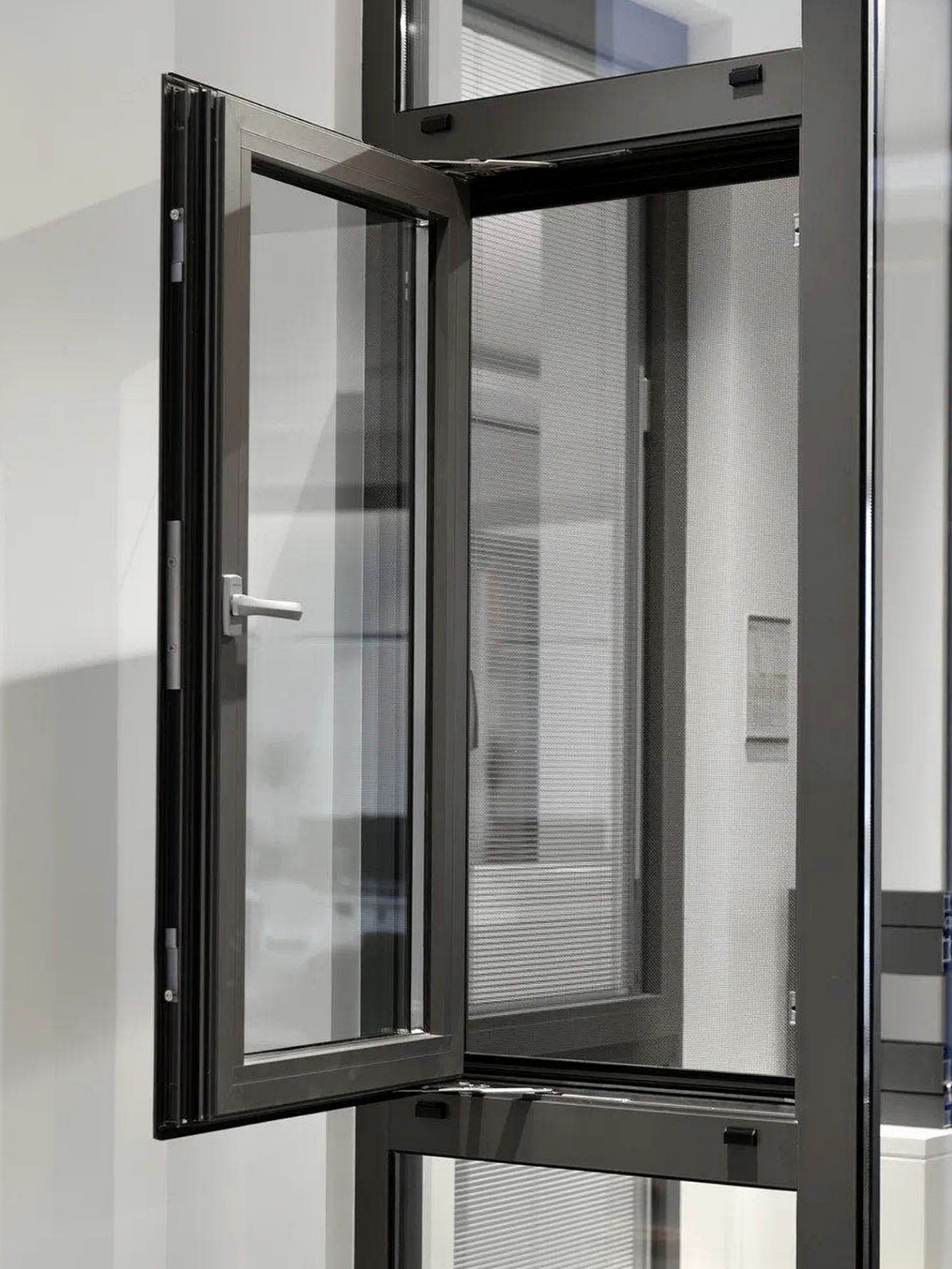
Modern home construction places significant emphasis on window systems that pair expansive exterior views with reliable daily function. Outward-swinging sashes, commonly selected for residential builds, depend heavily on internal mechanical networks to remain stable against unpredictable weather. Selecting a suitable outswing casement window hardware configuration helps support smooth operation, sash stability, and effective weather sealing.
Understanding how individual hardware parts interact empowers homeowners to choose configurations that maintain acoustic insulation, lower heating costs, and protect against unwanted intrusion. From friction hinges to multi-point locking gearboxes, each element serves a distinct purpose within the overall sash framework.
Load-Bearing Stability and Friction Hinge Engineering
A standard hinged window relies heavily on its side support mechanism to carry substantial glass weight. Unlike sliding assemblies supported along lower track channels, an outswing sash remains cantilevered during open positions. This physical orientation exerts continuous down-force on supporting joints, making high-strength load-bearing assemblies indispensable.
Modern friction hinges crafted from premium 304 stainless steel feature reinforced arms designed to counter sash drop. Within comprehensive systems like the Outswing Casement Window Hardware Solution, these hinges can accommodate sash widths between 300 mm and 750 mm, along with sash heights ranging from 300 mm to 1,800 mm. The system supports sash loads of up to 70 kg, while the specified C-groove friction hinge supports up to 60 kg.
Beyond supporting static weight, friction hinges provide resistance against sudden wind gusts. Integrated wind-resistant stops and triple safety linkages allow hinges to endure significant force without unexpected movement. Components undergo rigorous testing—often exceeding 25,000 to 30,000 open-close operational cycles—to guarantee long-term stability without joint loosening or track deformation.
Drive Gearboxes and Operating Mechanisms
The operational feel of a window handle depends on the internal gearbox mechanism hidden inside the profile channel. When the user turns a handle, the internal drive converts rotational force into linear motion along connecting lock bars. This action drives locking points smoothly into frame-mounted keepers.
High-grade drive components utilize bi-directional spindle drive gearboxes precision-cast as single units from durable zinc alloy. The bi-directional spindle drive gearbox uses a high-grade zinc alloy core precision-cast as a single unit. An anti-drift mechanism featuring up to 12.5 mm of adjustable extension helps maintain exact alignment over years of regular use.
The handle and spindle specifications should be matched to the selected window hardware system. This structural addition provides enhanced torsional rigidity, preventing lever wobble and ensuring smooth transmission of manual force. Systems are also tested across 30,000 cycles to maintain tight engagement over continuous operation.
Multi-Point Locking Systems and Weather Sealing
Securing an outward-opening window panel against severe weather requires force distribution along the entire sash perimeter. Single-point latches create localized sealing pressure, leaving top and bottom corners vulnerable to air drafts or rain seepage under heavy storm conditions.
A comprehensive multi-point locking system addresses this vulnerability by deploying several interconnected locking pins along the sash profile. When engaged via the primary handle, these pins pull the window panel tightly against perimeter rubber gaskets. A coordinated locking system can help maintain sash-to-frame contact, while the overall window’s water tightness and wind load resistance depend on the complete window design.
In addition to weather resistance, multi-point locking mechanisms improve household security. Distributing locking positions across multiple frame locations renders the sash virtually impossible to pry open from the outside using manual tools, delivering consistent peace of mind for residential living.
Integrating Secondary Features for Daily Convenience
Comprehensive modern window designs frequently incorporate secondary functional accessories, such as insect screens, without sacrificing overall structural integrity or weatherproofing performance. Integrating functional screens requires specialized hardware elements designed to work within narrow profile depth constraints.
Dedicated screen hinges built from 304 stainless steel support wide opening angles, such as 90°, 165°, or 180° sweep patterns. These hinges can be selected alongside compatible fly screen hardware according to the window profile and installation requirements. Paired with quick-release screw packs, screen panels can be detached smoothly for routine washing or seasonal maintenance without disassembling core window mechanics.
For long-term adjustments, modern hardware features 3D indoor adjustment capabilities. Installers or homeowners can easily tune sash alignment and gasket compression directly from inside the home, removing the need for exterior scaffolding during standard maintenance.
Advanced Architectural Hardware Solutions
Selecting high-performance fenestration components requires partnering with manufacturers that maintain rigorous testing standards and engineering precision. Since the 1990s, CMECH has developed hardware solutions for architectural doors and windows.
The company provides specialized solutions engineered for modern residential and commercial applications. Within the complete Outswing Casement Window Hardware Solution, buyers can select distinct product ranges adapted to specific architectural designs:
- Master Series: Engineered for heavy-duty applications, incorporating 4 mm thickened hinge arms, 60 kg to 70 kg load ratings, and advanced safety features for maximum wind resistance.
- Classic Series: Offers clean aesthetics and robust daily functionality, utilizing 3 mm stainless steel friction arms capable of supporting sashes up to 50 kg.
By focusing on precision engineering and high-grade materials, CMECH produces hardware systems that protect structural integrity while delivering smooth operational control.
Evaluating Long-Term Value in Window Hardware
Choosing appropriate hardware for outswing sashes goes beyond simple aesthetics. Integrating heavy-duty friction hinges, precision gearboxes, and multi-point locking assemblies directly influences energy efficiency, sound insulation, and long-term operating comfort.
Choosing compatible outswing casement window hardware helps support reliable operation, security, and weather sealing when the components are properly selected and installed.
