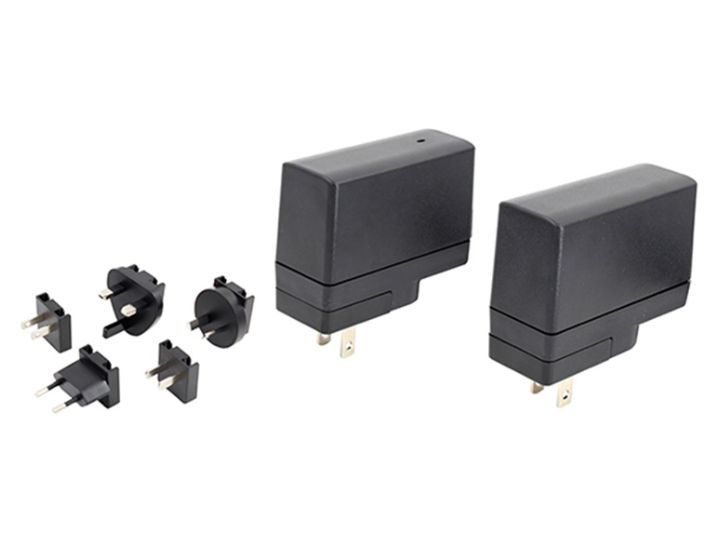
Finding a suitable power supplier for Europe and Southeast Asia requires more than searching for a manufacturer with competitive pricing. Equipment developers need to consider regional electrical requirements, product configuration, certification preparation, testing capability, and long-term supply. These factors become more important when the power adapter is used in medical, communication, industrial, or other professional equipment. For companies comparing a universal AC charger adapter supplier, the goal should be to identify a manufacturer that can match both the technical requirements of the product and the practical needs of international production.
Define the Target Markets Before Contacting Suppliers
The first step is to determine where the equipment will be sold and used. Europe and Southeast Asia are not a single regulatory environment, so manufacturers should identify the specific countries involved in the project.
Engineers should prepare information about input voltage, output requirements, rated power, connector configuration, operating environment, and intended equipment category. If the adapter will be used with medical equipment, additional medical safety requirements should be identified at the beginning.
For international projects, regional plug configurations should also be considered. An external adapter with interchangeable AC pins may provide greater flexibility when one product platform needs to serve several markets.
Preparing these requirements before contacting suppliers makes technical communication more efficient and allows manufacturers to compare different suppliers using the same criteria.
Check Whether the Supplier Understands International Compliance
A supplier serving international markets should understand that product compliance involves more than placing a certification mark on an adapter.
The manufacturer should be able to explain which standards are relevant to the target application and provide appropriate technical documentation. Buyers can ask about safety testing, EMC evaluation, efficiency requirements, and the documentation available for certification preparation.
For Europe, manufacturers may need to consider applicable EU requirements depending on the product and application. Southeast Asian markets can also have different national requirements, import conditions, and plug configurations.
Therefore, buyers should avoid assuming that one certificate automatically covers every market. Instead, they should confirm the requirements for each destination before finalizing the power architecture.
Compare Product Flexibility Rather Than Only Rated Power
Different equipment projects may require different output configurations. A supplier offering only one fixed configuration may not be suitable when an OEM plans to develop several models.
A flexible universal AC charger adapter platform can be useful when manufacturers need different output voltages or regional plug configurations. The UES12LCP-SPA/UES12LCP-SPC series, for example, provides 4V to 24V output options with power up to 12W and interchangeable AC pin styles.
The series also supports constant-current and conversion functions for suitable battery charging applications. This can be relevant for portable equipment that needs both external power and battery charging.
However, flexibility should always be evaluated against the actual application. Buyers should confirm connector requirements, output characteristics, charging architecture, and equipment load before choosing a specific configuration.
Ask How the Supplier Verifies Products
A supplier’s testing capability can reveal how seriously it approaches product development. Instead of asking only whether a product has passed certification, buyers should understand how the product was evaluated before certification and mass production.
Electrical performance, thermal behavior, protection functions, EMC characteristics, and environmental conditions may all require verification.
For international equipment projects, EMC is particularly important because the adapter will eventually operate as part of a larger electronic system. Standalone testing provides useful information, but system-level evaluation may reveal additional interference or compatibility issues.
Buyers should therefore ask whether the supplier can provide technical test information and communicate with engineers during prototype integration.
Evaluate Manufacturing and Supply Continuity
International OEM projects may continue for several years after the initial product launch. A supplier that can provide a suitable sample but cannot maintain stable production may create problems later.
Manufacturers should evaluate production processes, quality control, traceability, capacity planning, and change-management procedures. Product consistency is especially important when a power adapter has already been integrated into certified equipment.
Supply continuity should also be discussed early. Buyers can ask how production changes are communicated, how component substitutions are handled, and whether approved specifications can be maintained throughout the project lifecycle.
UE Electronic provides power solutions for medical, communication, and industrial applications and supports B2B customers with product development and application requirements.
Consider Regional Plug and Environmental Requirements
Europe and Southeast Asia include markets with different outlet configurations and operating conditions. An international product may therefore need more than one plug arrangement.
Interchangeable AC pins can simplify regional configuration because the core adapter platform can remain consistent while the appropriate plug is selected for the destination market.
Environmental conditions should also be reviewed. Depending on the target application, engineers may need to consider operating temperature, altitude, humidity, and ventilation conditions.
The UES12LCP-SPA/UES12LCP-SPC series supports working altitudes up to 5000 meters. It also provides short-circuit, overvoltage, and overload protection, together with 2 MOPP isolation protection for applicable medical applications.
These specifications provide important reference points during evaluation, but they should be considered together with actual application requirements. The complete equipment still needs to be assessed under its intended operating conditions.
Review Customization and Minimum Order Requirements
Low-volume projects, new product launches, and regional market testing may require smaller initial quantities. Buyers should therefore ask about minimum order quantities and whether sample development can be supported before larger production commitments are made.
Customization may involve output voltage, connector configuration, cable length, mechanical structure, or regional plug selection. The supplier should clearly define which changes are standard configurations and which require engineering development.
A supplier with experience in customized B2B projects can make these discussions more efficient because technical requirements can be reviewed before purchasing decisions are finalized.
Conclusion
Finding a reliable universal AC charger adapter supplier for Europe and Southeast Asia requires a structured evaluation process. Manufacturers should first define target-market requirements, then examine compliance knowledge, product flexibility, testing capability, manufacturing consistency, regional configurations, and customization conditions.
A suitable supplier should be able to communicate technical requirements clearly and maintain product consistency as the project moves from prototype development to production. UE Electronic supports B2B customers with power solutions for professional applications and provides configurations for different equipment requirements.
For companies developing products for multiple international markets, selecting the power supplier early can reduce later compatibility and certification risks. A detailed supplier comparison helps OEMs choose a power solution that fits not only the initial product design but also the broader requirements of international deployment.
