Industrial RFID systems often operate in places where ordinary electronic enclosures face daily challenges. Warehouses, transport yards, loading areas, and industrial sites may expose equipment to rain, dust, temperature changes, and repeated outdoor use. A reader must do more than identify tags. Its enclosure must protect internal components while supporting stable operation and practical maintenance.
For system integrators and industrial equipment buyers, enclosure quality affects installation planning, service requirements, and long-term operating costs. Understanding ingress protection, temperature tolerance, housing design, and installation conditions helps buyers assess whether a reader fits the demands of a specific site.
Why Enclosure Protection Matters in Industrial Settings
Dust can enter equipment through gaps around covers, cable connections, or mounting points. Once inside, it may affect circuit boards and electrical contacts. Water can create additional risks when equipment is exposed to rain, splashes, or outdoor cleaning activities. These conditions make enclosure protection an important part of industrial RFID selection.
An RFID outdoor reader should have a clearly stated ingress protection rating. The IP code describes protection against solid particles and water under defined test conditions. Buyers should check the complete rating instead of relying on terms such as weather-resistant or rugged. Clear specifications make it easier to compare equipment across suppliers.
An IP rating also has limits. It does not automatically confirm resistance to chemicals, corrosion, impact, or prolonged exposure to sunlight. Installation quality matters too. Cable glands, connectors, covers, and mounting interfaces can affect the protection of the complete assembly. Procurement teams should review these details alongside the rating listed in the product documentation.
IP67 indicates dust-tight protection and resistance to temporary immersion under specified laboratory test conditions. This rating can suit equipment installed in locations exposed to dust, rain, or occasional water contact. However, it should not be interpreted as approval for permanent underwater operation or unrestricted exposure to every outdoor hazard.
A fixed RFID reader with an IP67-rated enclosure gives integrators a measurable starting point for assessing environmental protection. They should still compare the rating with actual site conditions. For example, a covered loading bay and an uncovered vehicle yard may have different exposure patterns, even when both installations use fixed mounting.
The complete installation deserves attention as well. Incorrectly fitted connectors or damaged seals can reduce protection. Buyers should confirm the manufacturer’s installation instructions and inspect relevant connection points during maintenance. These checks help preserve the protection level intended by the enclosure design.
Temperature Tolerance and Housing Design
Outdoor equipment may experience cold mornings, hot afternoons, and rapid temperature changes. These conditions can affect electronic components and enclosure materials. Buyers should compare the stated operating temperature range with local climate records and the equipment’s expected exposure. The rated range should reflect the actual operating environment rather than storage conditions.
Temperature specifications are particularly relevant when readers are installed on exposed poles, vehicle gates, or open loading platforms. Direct sunlight can raise the temperature around a housing beyond the surrounding air temperature. Installation position, ventilation, and nearby heat sources should therefore be considered during site assessment.
A suitable housing also needs to retain its protective function across the stated temperature range. Material selection, seals, and assembly quality all contribute to this requirement. Procurement teams can request technical documentation when comparing products. They should also clarify whether additional protection is needed for locations with severe temperature swings or unusual environmental exposure.
Enclosure design affects how equipment is mounted, connected, and serviced. A suitable structure should protect internal electronics while providing practical access for approved installation and maintenance tasks. Mounting points must also match the intended support structure. Poor alignment or excessive mechanical stress can complicate installation and affect the housing over time.
Cable routing is another practical consideration. Connections should be arranged to reduce strain on cables and limit opportunities for water to collect near entry points. Installers should follow the manufacturer’s guidance for connector orientation, sealing, and cable support. These measures help the complete installation maintain its intended environmental protection.
Industrial buyers should also consider how the housing fits the site’s maintenance process. Equipment placed above vehicle lanes or near moving machinery may require special access arrangements. A well-planned installation makes inspections more manageable and reduces unnecessary disturbance to surrounding operations.
Matching Reader Specifications to Real Applications
Enclosure protection is only one part of reader selection. For an overview of RFID reader types, components, and operating principles, see RSTC’s RFID reader guide. Read range, tag orientation, surrounding materials, and interference can influence identification performance. Buyers should review these factors together instead of treating a long-range specification as a guarantee of the same results at every site.
For example, a transportation yard may need to identify tagged goods or vehicles across a defined access area. Warehouse applications may require coverage around loading points or storage zones. A fixed RFID reader should be assessed against the required detection area, tag placement, and movement patterns before the installation layout is finalized.
Multi-reader deployments require additional planning. Reader placement, overlapping coverage, and radio-frequency coordination can affect system behavior. Integrators should verify how equipment performs in the intended configuration and follow the manufacturer’s deployment guidance. Site testing can reveal blind spots or unnecessary overlap before the system enters routine operation.
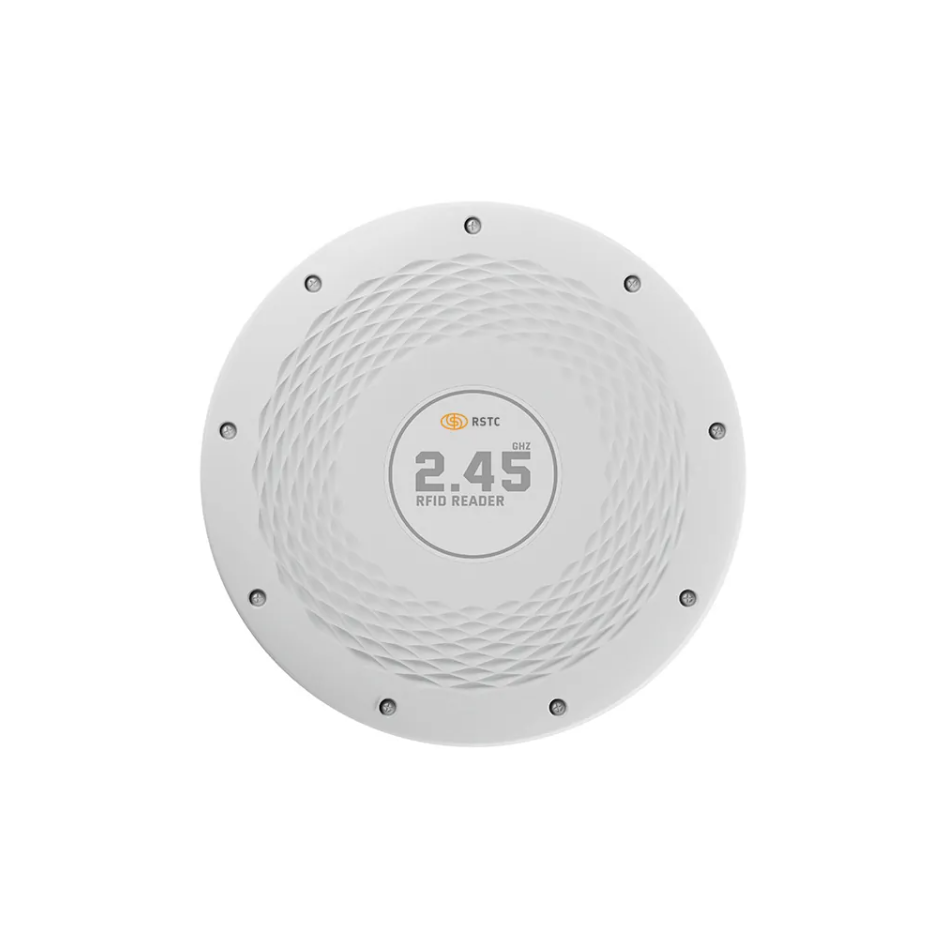
The RS-AI01 Fixed 2.45GHz Active Circle Outdoor RFID Reader provides an example of how enclosure specifications fit into a wider equipment assessment. It is designed for omni-directional, long-range tag identification. Its software-adjustable read range reaches up to 120 meters, according to the supplied product specifications.
The model uses an IP67-rated enclosure and supports an operating temperature range of −40°C to +60°C. These specifications help buyers assess its suitability for fixed indoor or outdoor installations. Actual reading performance still depends on the tags, site layout, installation conditions, and surrounding radio environment.
The reader also supports high-speed multi-tag processing and operation in dense multi-reader deployments. Firmware upgrades are available through serial or network connections. C++ and C# API development kits support system integration. These capabilities may be relevant to integrators connecting reader hardware with warehouse, attendance, or transportation management platforms.
Make Enclosure Selection Part of System Planning
Industrial buyers should evaluate enclosure ratings alongside temperature limits, mounting requirements, tag performance, and integration needs. A specification sheet provides a useful starting point, but site conditions determine which features matter most. Installation and maintenance procedures also influence how well equipment performs over time.
RSTC provides RFID reader options for industrial identification and management applications. When evaluating an RFID outdoor reader, buyers can compare the RS-AI01 specifications with their deployment requirements and consult RSTC for relevant technical details. A carefully selected reader can support a practical system design when its capabilities match the operating environment.
