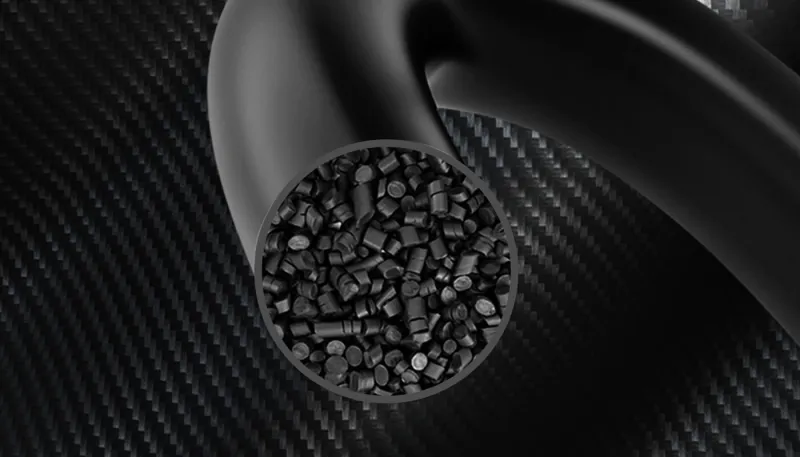
Choosing between PA-CF and PLA-CF depends on the performance priorities of the finished part. SUNLU PA6-CF is designed as a high-strength, high-rigidity material with excellent heat resistance and dimensional stability, while SUNLU PLA-CF enhances PLA with carbon fiber reinforcement to provide lightweight prints with high strength. For businesses selecting carbon fiber 3D printer filament, the key difference lies in how each material balances strength, rigidity, weight, heat resistance, and the demands of functional applications.
PA6-CF: Built for High-Strength Engineering Parts
SUNLU PA6-CF is positioned for high-strength engineering applications. It combines high strength and high rigidity with excellent heat resistance and dimensional stability, making it suitable for printed components that require demanding mechanical performance.
Its performance is further enhanced by 20% high-strength carbon fiber reinforcement. This addition significantly improves the stiffness and strength of printed parts compared with conventional PLA or ABS materials.
For professional users evaluating 3D print carbon fiber filament, this combination gives PA6-CF a clear focus. It is designed not simply for producing strong-looking models, but for creating high-strength engineering parts where load capacity and mechanical stress resistance are important.
PLA-CF: Lightweight Strength with Carbon Fiber
SUNLU PLA-CF takes a different approach by enhancing PLA with carbon fiber reinforcement. The material significantly improves rigidity and dimensional stability, making it suitable for high-strength functional parts.
The filament contains 15% carbon fiber filling. This reinforcement helps produce lightweight printed parts while significantly enhancing strength. The result is a material that combines lightweight properties with strong mechanical performance.
For businesses seeking carbon fiber 3D printer filament, PLA-CF can therefore be a suitable choice when reducing weight is an important consideration alongside strength. It is positioned for functional parts and high-strength model printing.
20% vs 15% Carbon Fiber Reinforcement
One of the clearest differences between the two SUNLU materials is their carbon fiber content. PA6-CF contains 20% high-strength carbon fiber, while PLA-CF contains 15% carbon fiber filling.
The 20% reinforcement in PA6-CF significantly improves the stiffness and strength of printed parts compared with conventional PLA or ABS materials. PLA-CF’s 15% carbon fiber filling, meanwhile, significantly enhances strength while maintaining a lightweight profile.
For buyers comparing 3D print carbon fiber filament, carbon fiber percentage is therefore one useful factor to consider. However, the percentage should be evaluated together with the overall material properties and the intended application rather than viewed in isolation.
Comparing Rigidity and Strength
Both materials are designed to improve mechanical performance through carbon fiber reinforcement. SUNLU PA6-CF provides high stiffness and strength, while PLA-CF significantly improves rigidity and dimensional stability compared with standard PLA.
PA6-CF’s high-strength and high-rigidity positioning makes it particularly suitable for demanding engineering parts. PLA-CF focuses on combining high strength with lightweight characteristics, creating an option for functional components where weight and mechanical performance need to work together.
This distinction gives businesses two different approaches to carbon fiber-reinforced printing. PA6-CF emphasizes high-strength engineering performance, while PLA-CF balances strength with lightweight printed parts.
Heat Resistance and Dimensional Stability
Heat resistance is another important distinction when comparing these materials. SUNLU PA6-CF is specifically described as having excellent heat resistance and dimensional stability.
PLA-CF is described as significantly improving rigidity and dimensional stability through carbon fiber reinforcement. Its material profile emphasizes lightweight properties and high strength alongside those improvements.
For buyers selecting carbon fiber 3D printer filament, this means the intended operating requirements should guide the decision. Where excellent heat resistance is a key material requirement, PA6-CF has a clear stated advantage based on the provided specifications.
Applications for PA6-CF
SUNLU PA6-CF is especially suitable for functional components requiring high load capacity or mechanical stress resistance. The provided applications include gears, structural supports, and tool accessories.
These applications reflect the material’s focus on high-strength engineering parts. A gear, structural support, or tool accessory may require a combination of stiffness, strength, and resistance to mechanical stress.
The 20% high-strength carbon fiber reinforcement enhances the material’s performance while maintaining controllable printing characteristics. This allows users to achieve high-strength and highly reliable prints for industrial and professional applications.
Applications for PLA-CF
SUNLU PLA-CF is suited to functional parts and high-strength model printing. Its 15% carbon fiber filling significantly enhances strength while supporting lightweight printed parts.
This combination makes PLA-CF particularly relevant when a project requires mechanical performance without giving up the advantage of a lightweight part. The material’s improved rigidity and dimensional stability further support its positioning for functional applications.
For businesses producing high-strength models or functional parts, 3D print carbon fiber filament such as PLA-CF can therefore provide an approach centered on lightweight strength and improved rigidity.
Controllable Printing with PA6-CF
High material performance needs to be matched by manageable printing characteristics. SUNLU PA6-CF is described as maintaining controllable printing characteristics despite the addition of high-strength carbon fiber.
This balance allows users to pursue high-strength and highly reliable prints while working with a carbon fiber-reinforced material. For industrial and professional users, maintaining controllable printing characteristics can support the practical use of the material in demanding applications.
The focus is therefore not solely on reinforcement. PA6-CF combines carbon fiber with a material profile intended to deliver high strength, high rigidity, excellent heat resistance, and dimensional stability.
Which Carbon Fiber Filament Should Businesses Choose?
PA6-CF and PLA-CF serve different priorities. SUNLU PA6-CF is the more focused choice for high-strength engineering parts requiring high load capacity or mechanical stress resistance. Its 20% high-strength carbon fiber reinforcement, high rigidity, heat resistance, and dimensional stability support this role.
SUNLU PLA-CF offers a different balance. With 15% carbon fiber filling, it produces lightweight printed parts while significantly enhancing strength. Its improved rigidity and dimensional stability make it suitable for functional parts and high-strength model printing.
Finding the Right Balance for the Application
The PA-CF versus PLA-CF decision should begin with the requirements of the finished component. For demanding engineering parts where high strength, rigidity, heat resistance, and mechanical stress resistance are priorities, SUNLU PA6-CF provides a focused solution.
For applications where lightweight construction, strength, rigidity, and dimensional stability are important, SUNLU PLA-CF offers a different carbon fiber-reinforced approach. By matching the material’s characteristics with the actual application, businesses can make a more practical choice when evaluating carbon fiber 3D printer filament and 3D print carbon fiber filament.
