Routine diabetes management relies on more than glucose meters and test strips. Different users may require blood-sampling devices, insulin-delivery products, sharps-disposal options, and other consumables that support regular monitoring or treatment. Distributors therefore face a practical inventory question: which items should be kept in regular stock, and which should be ordered according to narrower demand patterns? The answer depends on user demographics, testing frequency, care environments, product specifications, and regional purchasing habits.
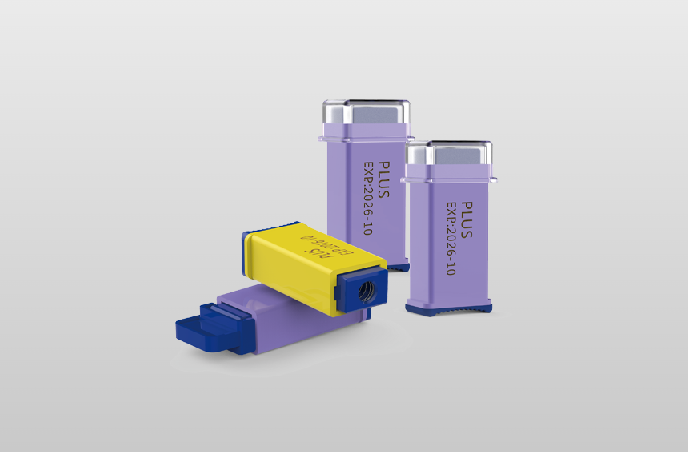
Within this broader landscape, diabetic supplies need to be selected with both clinical function and inventory practicality in mind. SteriLance, a global OEM/ODM manufacturer of medical lancets, offers several safety-lancet formats that illustrate how different activation methods can address varying blood-collection requirements.
Core Categories Worth Keeping In Stock
Blood glucose testing remains one of the most common areas requiring recurring consumables. Test strips, compatible sampling devices, meters, and sharps-disposal products can form the basic inventory layer for customers who perform regular capillary testing.
Lancets deserve particular attention because demand tends to recur rather than occur as a one-time purchase. Users may have different preferences regarding activation, penetration characteristics, and handling. Maintaining several compatible options can therefore be more useful than relying on one format for every customer group.
Insulin-related products represent another major category. Pen needles and other injection accessories may be required alongside glucose-monitoring equipment, depending on the treatment approach used by individual customers. Inventory planning should distinguish monitoring products from injection products because their consumption patterns and compatibility requirements differ.
Matching Products To User Profiles
User demographics can significantly influence purchasing patterns. Older adults may value straightforward activation and stable handling, while experienced self-testers may prioritize portability or specific device characteristics. Pediatric applications can introduce additional considerations related to intended use and age suitability.
Care settings also affect product requirements. Home users often purchase smaller quantities but return to the same consumables repeatedly. Clinics, pharmacies, community programs, and occupational screening services may instead require larger volumes with predictable replenishment cycles.
Product variety should serve identifiable demand rather than simply expanding the catalog. Diabetic supplies become easier to manage when distributors classify inventory according to activation style, intended application, compatibility, package quantity, and customer profile. Such categorization can help sales teams recommend suitable products without creating unnecessary stock complexity.
Understanding Safety Lancet Options
Safety lancets can differ substantially in their activation mechanisms. Pressure-activated designs rely on contact and applied pressure, whereas button-operated models use a dedicated trigger. Adjustable-depth versions introduce another variable by allowing the puncture setting to be adapted to different fingertip conditions.
SteriLance’s safety-lancet portfolio spans pressure-activated, side-button, push-button, and adjustable-depth formats. This range demonstrates why distributors may need to think in terms of device categories rather than treating all safety lancets as interchangeable. Different users and care environments can call for different handling characteristics.
Packaging information is equally relevant to distribution. Lot identification, expiration details, and clear product labeling support stock rotation and traceability. Such information becomes particularly valuable when multiple configurations are stored within the same warehouse or distribution channel.
Inventory Planning And Product Compatibility
Forecasting should begin with historical demand rather than assumptions based solely on catalog size. Sales records can reveal which gauge options, activation types, package quantities, and related accessories move consistently within a particular market.
Compatibility deserves separate attention. Glucose meters require compatible test strips, while injection systems can impose specific requirements for pen needles. Ordering teams should therefore examine product relationships before increasing inventory depth, especially when customers commonly purchase several components together.
Storage capacity can also influence the ideal assortment. High-volume items may justify greater safety stock, while less frequently requested variants can be managed through shorter purchasing cycles. Diabetic supplies should be evaluated according to turnover, shelf life, demand variability, and replenishment lead time rather than unit price alone.
Building A Resilient Distribution Assortment
Supply continuity becomes easier to manage when critical consumables have clearly defined inventory priorities. Fast-moving products can receive closer stock monitoring, while slower-moving variants may require periodic demand reviews. Such segmentation helps distributors allocate warehouse space according to actual customer needs.
Supplier evaluation adds another dimension. Manufacturing capabilities, quality systems, product certifications, documentation, and OEM/ODM support can all affect long-term distribution planning. Distributors serving regulated healthcare markets may also need to review the applicable requirements for their specific territory.
Customer feedback can improve future purchasing decisions. Repeated requests for certain activation styles or package sizes may indicate an underserved segment, while declining demand can signal that an assortment needs adjustment. Regular review keeps inventory aligned with practical market behavior instead of allowing the catalog to remain unchanged indefinitely.
Conclusion
Effective diabetes-care distribution is ultimately an exercise in matching recurring needs with sensible inventory decisions. Monitoring consumables, injection accessories, safety lancets, and disposal products each occupy different roles, and user profiles can influence which configurations are most relevant. Distributors that consider compatibility, turnover, storage, traceability, and regional requirements can build assortments that are easier to manage and more responsive to routine demand.
Diabetic supplies should therefore be viewed as a connected product ecosystem rather than a collection of unrelated medical consumables. Against that backdrop, SteriLance demonstrates how a diversified safety-lancet portfolio can give distributors multiple device formats to consider when developing practical diabetes-care product ranges.
Disclaimer: This content is provided for general health education and informational purposes only. It does not constitute medical advice, diagnosis, or treatment. Individual health conditions vary, and no health education article can replace a face-to-face consultation with a qualified healthcare professional or licensed medical institution. If you have specific health concerns or feel unwell, please seek care from a licensed medical facility and do not delay treatment because of content on this platform.
