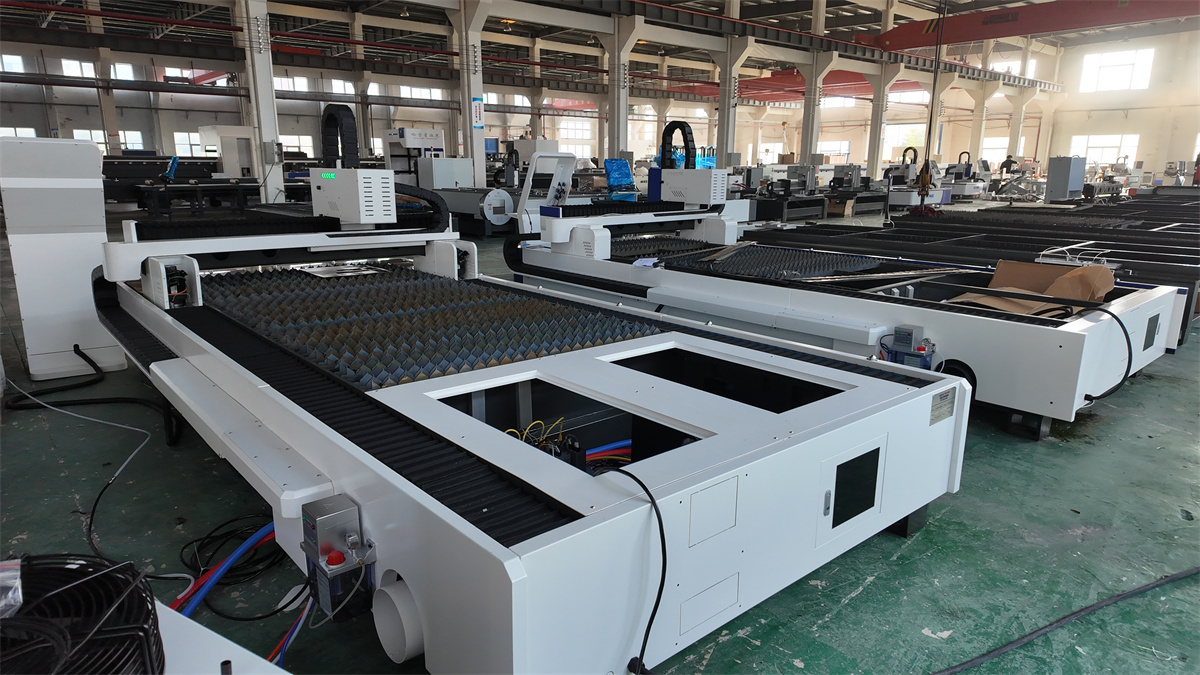
A steel bracket with closely spaced holes and a heavy blank awaiting machining ask different things of a cutting process. The bracket may depend on the geometry left by the cut, while the blank mainly needs sufficient stock for its later operations. Choosing between laser and plasma begins with that difference in the required component.
A CNC laser cutting machine and a plasma system both separate steel through localized heating, but their heat sources and cutting conditions differ. The useful comparison follows those differences into hole shape, edge condition, remaining processing and production quantity. Plate thickness matters within that task; it cannot define the choice independently of the required result.
How the Two Processes Form a Kerf
Laser cutting concentrates optical energy onto the steel, heating a small region as the head advances. Gas helps remove material from the developing opening, or kerf. On a metal laser cutting machine, beam focus, gas and travel work together to maintain that separation through the plate. The focused interaction makes feature size and the spacing between neighboring cuts relevant to the process choice.
Plasma cutting establishes an electrical arc through a jet of ionized gas. The arc heats the electrically conductive steel, and the gas stream removes molten material as the torch moves. Current, nozzle condition, gas and torch height influence that interaction. Cutting the intended contour requires suitable conditions at the torch as well as movement that follows the programmed path.
Both methods create a cut edge through a thermal process. The width of the opening, the edge’s angle through the thickness and metal adhering beneath the cut describe different outcomes. A narrow kerf does not independently establish a square edge, just as a separated profile does not establish a finished hole. Those characteristics acquire importance through the component’s intended use.
Which Cut Characteristics Matter to the Finished Part
Small holes and narrow webs give local geometry considerable weight. A metal laser cutting machine deserves attention where its concentrated cutting action can preserve the features required directly from the plate.
The relevant benefit is the usable feature, including its dimensions and edge condition. A hole that must locate a fastener precisely poses a different requirement from an opening with generous assembly clearance.
Large blanks destined for machining give a different weight to the initial edge. Plasma cutting can remain practical if the cut blank retains enough machining allowance for the specified milling or drilling operations.
In that route, a finer initial edge may contribute little if the same region will be removed anyway. Enough machining allowance and an acceptable starting condition matter more than an unnecessarily refined blank.
Joining or coating introduces additional edge requirements. Adhering metal may need removal before fit-up, and the thermal condition near an edge may affect the subsequent operation.
Assessing a CNC laser cutting machine against plasma consequently includes the work remaining after separation. A quick cut followed by substantial cleanup can serve a job differently from a slower cut that leaves less finishing work.
Capacity Figures Need the Cutting Task Beside Them
Laser power and plasma current describe different inputs to their respective processes. Their numerical sizes cannot directly rank a CNC laser cutting machine against an arc-based system.
Steel grade, thickness, gas and required edge quality determine what a useful operating condition means for either route. A maximum separation capability also answers a different question from sustained production of an acceptable feature.
Separate laser and plasma configurations are available from Colgar, including RB3015 fiber laser equipment and the RB3060 gantry plasma system. Both routes require comparison on identical steel parts under matching conditions before speed, cost or accuracy advantages become quantifiable. The portable RB1530’s stated plasma thickness range explicitly depends on its plasma power source, reinforcing the need to associate a capability with its actual configuration.
Repeated starts change the task even when total cutting length remains constant. A plate containing many holes requires more entries into the material than one long external contour. Acceleration around small features and travel between separate cuts also contribute to the complete cycle. A straight-cut speed therefore cannot describe the output of every nested sheet or establish one process as universally faster.
Choose the Route That Delivers the Required Component
A representative comparison gives the metal laser cutting machine and plasma system the same steel grade, component geometry and finished requirements. Features accepted directly after cutting and features reserved for later machining need separate assessment.
The useful outcome includes required cleanup and subsequent processing, so the comparison follows a completed component rather than timing only the motion around its perimeter. A tapered cut can alter fit even when the top outline follows the drawing.
The RB3060 gantry platform offered by Colgar and the portable RB1530 illustrate differences within plasma equipment itself. The former lists dual drive and linear guides, while the latter uses arc-voltage height control. These arrangements address movement and working distance, with the plasma source and cutting settings still determining the interaction that separates the steel.
The laser and plasma routes available from Colgar address different priorities within plate fabrication. Intricate profiles with demanding as-cut features favor close attention to laser capability, while larger blanks with planned edge machining can leave more scope for plasma. The deciding advantage is the required finished component with its remaining operations included.
