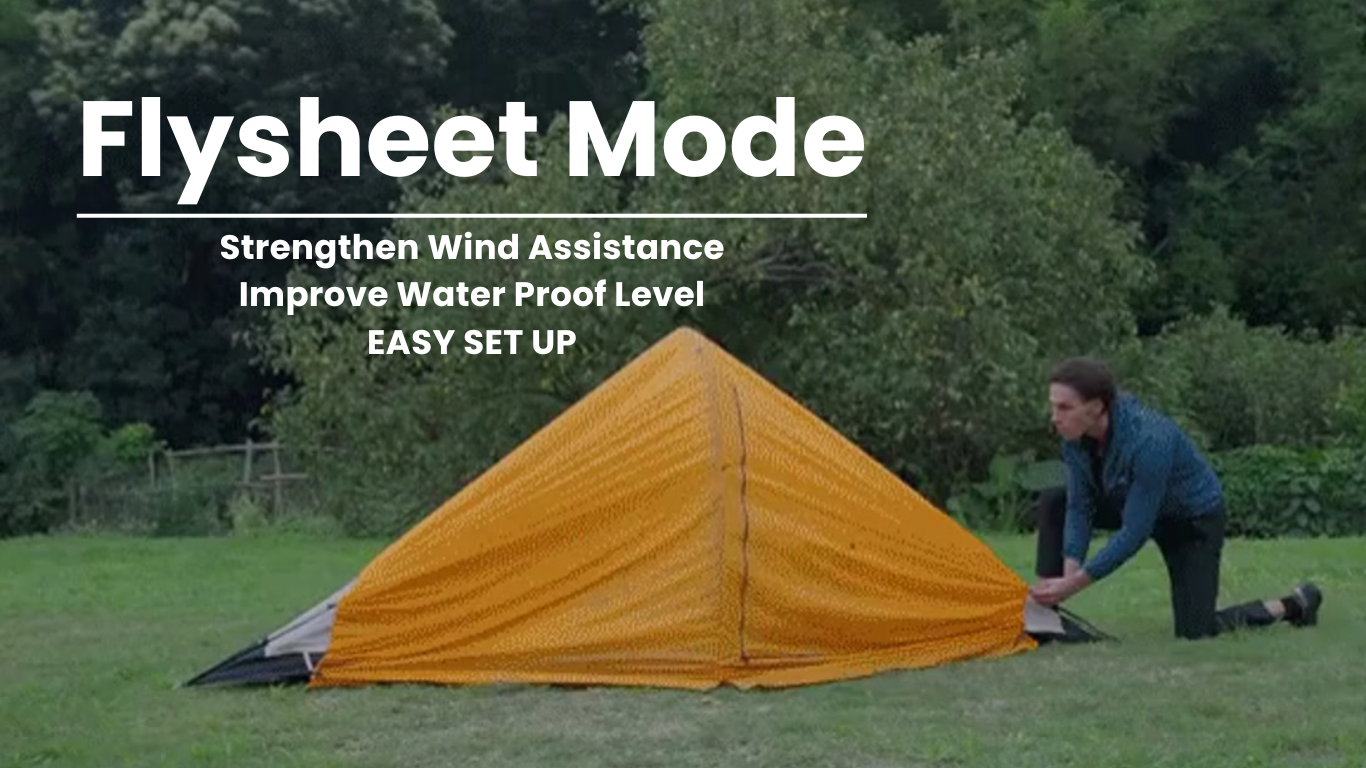
There’s no single official body that certifies a tent as “ultralight,” but within backpacking circles the term generally applies to single-wall or minimalist double-wall shelters with a trail weight under roughly 2 to 3 pounds (900 g to 1.4 kg) for a one-person tent, with many designs coming in well under 1 kilogram. That threshold isn’t arbitrary. It reflects the point at which a shelter stops being a noticeable fraction of total pack weight on multi-day trips and becomes a marginal addition, which is the aim of the category.
Weight Is the Starting Point, Not the Whole Definition
A tent’s actual carrying weight depends on more than the tent body, fly, and poles. Stakes, guylines, repair items, and stuff sacks also add to the total load, sometimes several hundred grams. For this reason, the lightest figure quoted for a tent and the weight in the pack can differ considerably, even between tents with similar designs.
THECATAL’s Wind Anchor shows how wide the range can be. The standard model has a net tent weight of 850 g and a minimum setup weight of 992 g, which counts the 130 g of poles and two 6 g stakes. With guy ropes, a TPU repair patch, and a repair tube added, the total reaches 1,110 g. When comparing ultralight tents, hikers get a more realistic picture by adding up every component they plan to carry rather than relying on the basic tent weight alone.
Fabric and Pole Choices Behind the Number
Weight savings in tent design trace back mostly to two things: fabric denier and pole architecture. Lower-denier fabrics, measured in “D,” use thinner threads and reduce weight, but they usually need a tight weave or a coating to keep tear strength and waterproofing, since thinness alone costs durability.
Pole structure matters just as much. A single-arch or trekking-pole-supported design uses less material than a multi-pole freestanding dome, which is one reason many ultralight shelters use fewer poles or rely on trekking poles that hikers already carry.
THECATAL takes this approach with the Wind Anchor, which is built around the UniArc DualAnchor Shell Structure, a single-arch, dual-anchor shell with a streamlined twin-cone form. The shape reduces wind resistance through geometry instead of thinning the fabric everywhere.
A Concrete Example of Sub-Kilogram Weight
Numbers are more useful than category labels when evaluating a real product. The standard Wind Anchor uses 20D fabric, while the Wind Anchor Pro uses 10D. Both are made from Coatforce ripstop, a nylon with a double-sided silicone coating. The Pro brings the tent alone down to 650 g, with a minimum setup weight of 792 g and a total weight of 910 g.
The Pro is a more suitable option for backpackers prioritizing weight savings. When comparing a hiking tent ultralight enough for multi-day trips, buyers should check which components are included in the quoted weight rather than comparing figures without considering their measurement basis.
What Gets Traded Away for Lower Weight
Reaching ultralight weights generally means giving something up, and buyers are better served knowing what that is than treating “ultralight” as a purely positive label. Thinner fabrics carry more risk of abrasion damage from rocks or branches than heavier materials do, even when coated. Single-arch or trekking-pole-dependent designs can also offer fewer ways to adjust the pitch on uneven or rocky ground than a multi-pole freestanding tent.
THECATAL addresses part of this trade-off in the Wind Anchor. The tent has a 5000 mm waterproof rating, and with the fly sheet its 2.5-layer construction adds protection against heavy rain. The shell is rated to endure winds up to Beaufort scale level 12. The tent can also be pitched freestanding or non-freestanding, which gives more options on rocky or uneven terrain. Abrasion resistance is a separate durability question from waterproofing or wind resistance, so careful campsite selection and a footprint still matter.
Questions Worth Asking Before Buying
Given how much variation exists under the single label “ultralight,” a few concrete questions tend to be more useful than the term itself. Is the quoted weight the tent body, the minimum setup, or the full kit? What fabric denier is used, and what waterproof rating does it carry in millimeters? Is the tent freestanding, or does it depend on trekking poles for support?
For anyone comparing a compact solo shelter, checking an ultralight 1p tentagainst these specific figures gives a clearer basis for judging whether it will meet the demands of a particular trip than the marketing term alone.
Conclusion
An ultralight hiking tent is best understood as a shelter engineered to minimize carried weight through thinner fabrics and simplified pole structures, typically landing under roughly 1 kilogram for a one-person design, though the exact threshold varies with how a manufacturer measures the weight.
The Wind Anchor is one example of the range: 650 g for the Pro tent alone, 850 g for the standard tent, and totals of 910 g and 1,110 g with the full kit, paired with a 5000 mm waterproof rating. The term “ultralight” works as a first filter for a search, but a tent’s actual specifications are what show whether it fits the conditions of a trip.
