Modern product development demands a delicate balance between speed, cost efficiency, and strict structural precision across every engineering phase. As manufacturing timelines compress globally, project teams frequently face the intense challenge of transitioning rapidly from initial digital concepts to functional hardware.
When a single production technique is relied upon, it frequently results in the creation of operational bottlenecks, which in turn causes key design validations to be delayed and causes needlessly high initial capital expenditures. Streamlining the process of overcoming these recurring industrial challenges, mitigating risks, and ensuring eventual market success and long-term profitability can be accomplished by integrating modern subtractive techniques with custom injection components.
Engineering managers are able to eliminate hidden blind spots and significantly expedite commercialisation cycles by conducting an analysis of how these complimentary processes function together.
In situations when digital prototypes do not exhibit the same mechanical behaviour as the components that will be used in the final production, validation teams are required to look for alternate fabrication processes before mass production is given the go-ahead.
Establishing clear protocols for material selection and tooling pathways ensures that mechanical assemblies perform reliably under real-world operating loads, thermal stress, and challenging operational environments without unexpected failures.
Evaluating the Limits of Additive Models in Functional Testing
Product development cycles frequently begin with layered additive concepts to verify basic geometric fit, assembly clearance, and visual appearance. However, engineering groups often discover that these printed samples fail to replicate the exact mechanical anisotropy, elongation, and thermal behavior of final components.
Layer lines introduce inherent structural weaknesses that distort stress distribution under real-world operating loads and demanding thermal cycles.
Furthermore, testing high-stress mechanical assemblies requires authentic production-grade thermoplastics that standard additive platforms cannot process properly.
Relying solely on non-molded samples creates significant blind spots regarding true structural performance, making a transition to genuine molded evaluation essential before committing to mass tooling. Without this rigorous physical testing, unforeseen failure modes can easily emerge during final customer deployment and commercial field usage.
Strategic Advantages of Advanced Tooling Systems for Resins
Transitioning to rapid prototype tooling bridges the critical gap between initial design phases and full-scale steel mold manufacturing. By cutting precision aluminum or soft steel block inserts, manufacturers can inject identical end-use polymers such as ABS or polycarbonate under actual pressure. This approach allows validation teams to analyze shrinkage, wall thickness variations, and gate performance using parts matching final production specifications.
Gathering performance metrics from actual molded articles significantly reduces downstream redesign risks and accelerates overall market readiness for launching products.
Engineers gain valuable insights into how polymer flow dynamics affect structural integrity before investing in expensive hardened steel tooling systems. These preliminary insights prevent costly tooling modifications later in the commercialization lifecycle and ensure robust structural quality across batches.
Balancing Speed and Investment in Bridge Manufacturing
Securing a competitive market entry requires minimizing lead times without inflating initial capital expenditure on hardened multi-cavity production molds. Utilizing shared master unit die insert systems allows project managers to interchange core and cavity blocks rapidly while keeping investments low.
HordRT implements these flexible cavity strategies to deliver functional trial samples within accelerated timeframes, supporting low-volume assembly lines efficiently.
Balancing upfront tooling investment against projected test volumes ensures that engineering groups maintain financial efficiency across every stage of product scaling. Utilizing rapid prototype tooling during this intermediate phase offers a dependable safety net against unexpected design flaws before full volume production begins. Managing these financial trade-offs protects overall project budgets without sacrificing critical component quality or functional integrity.
Integrating Subtractive Machining for Complex Geometries
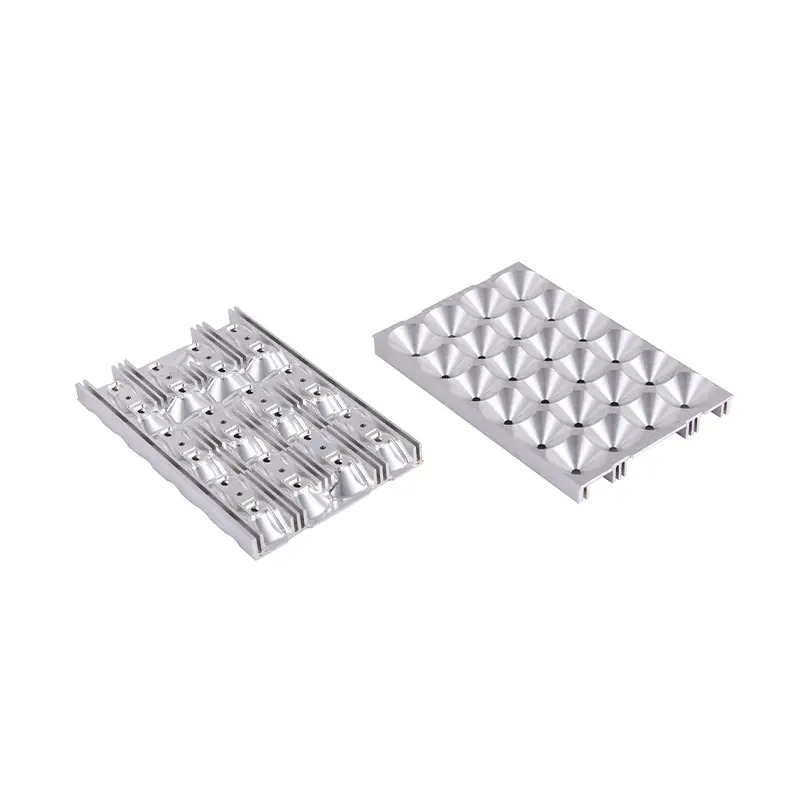
While molding processes excel at high-volume replication, precision CNC machining remains the cornerstone for producing intricate metallic components and master patterns. Multi-axis milling centers achieve tight dimensional tolerances and superior surface finishes that secondary operations cannot easily match under standard shop conditions. Combining subtractive machining with rapid prototype tooling enables the rapid fabrication of custom mold bases and functional metal brackets.
This parallel workflow shortens overall project lead times and ensures that metallic and polymeric assemblies fit together flawlessly during final integration. Leveraging both technologies under one roof provides manufacturers with the ultimate flexibility to meet demanding engineering specifications without unnecessary delays or communication gaps. HordRT ensures that metallic components and molded parts align perfectly with strict quality benchmarks.
Securing Long-Term Success Through Integrated Manufacturing
Achieving seamless transitions from prototyping to full-scale production requires close collaboration with experienced manufacturing partners who understand complex technical workflows deeply.
Maintaining rigorous oversight throughout every machining and molding phase guarantees that final assemblies withstand demanding operational environments reliably under stress. HordRT provides comprehensive manufacturing solutions designed to optimize lead times, reduce financial risks, and elevate product reliability.
Implementing these advanced manufacturing strategies empowers engineering teams to bring innovative designs to market with absolute confidence, structural precision, and operational speed.
Careful planning and execution across every production milestone eliminate costly iterations, streamline supply chains, and secure long-term competitive advantages in fast-moving global markets.
