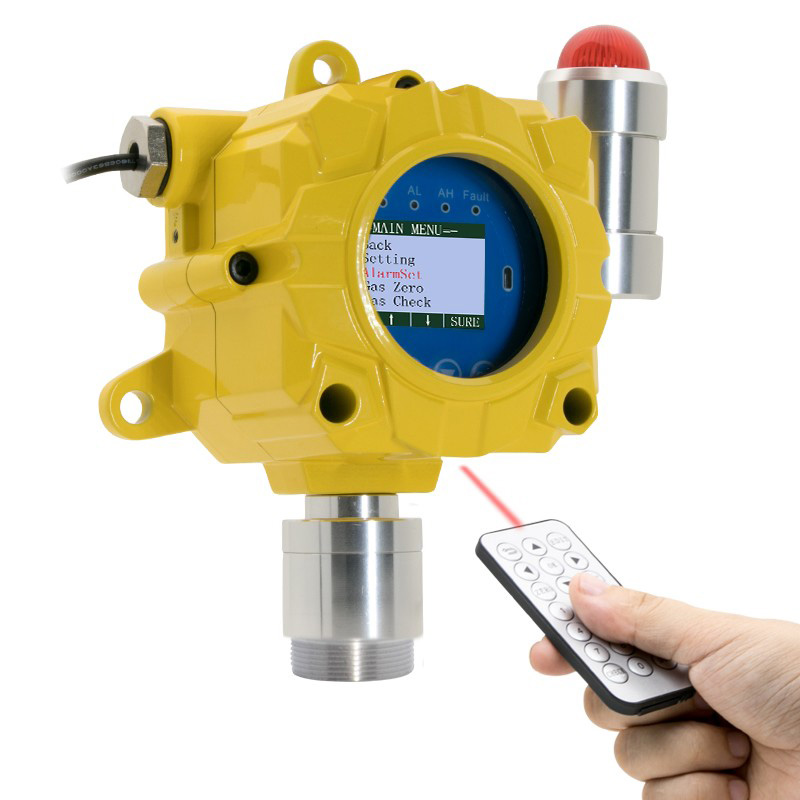
In a recirculating fish farm, the water treatment operator and the maintenance crew may both track carbon dioxide. One needs to know how much is dissolved in the culture water. The other needs to know what is present in the air around equipment and occupied areas. A fixed multi gas detector installation can address the second task through gas-specific monitoring points.
Indoor work areas can have different air conditions around a water treatment system, in a service recess, and along a walkway. A useful monitoring design starts by locating the processes that release carbon dioxide to the air. It then follows the air toward the people working in those spaces and assigns a response to each alarm point.
Give Air and Water Measurements Separate Jobs
Fish release carbon dioxide into the water as they respire. In a recirculating system, aeration or a degassing unit can transfer some of the dissolved gas into an air stream. Water measurements track conditions in the culture system, while an airborne reading from a CO₂ gas detector concerns the air reaching the sensor.
The units reflect that difference. Dissolved carbon dioxide may be expressed as mass per volume of water. An air reading may use parts per million or percent by volume. A change in an air reading near a treatment unit cannot be used to calculate the concentration in a fish tank from the air value alone.
Air monitoring becomes relevant where the gas transferred out of water could enter an occupied space. For a degassing unit with ducted discharge, the work-area review can follow the discharge route and account for the way the room is ventilated. The resulting detector point represents that air location and has a distinct purpose from the farm’s water quality measurements.
Follow Airflow Around Treatment Equipment
A service recess below a treatment skid is worth evaluating if released carbon dioxide can reach it. The gas is denser than air under comparable conditions, but airflow and mixing affect where it accumulates. A low point behind a barrier can behave differently from one exposed to fresh air from a supply grille.
Equipment layout gives that observation a practical use. A CO₂ gas detector beside a walkway and a sensor near a recessed service area would observe different positions. Before finalizing a fixed multi gas detector layout, the site can review how air moves during routine operation and what changes when equipment or ventilation is taken out of service.
The Bosean K-G60 provides a wall-mounted option for a point with a defined gas and measuring range. Its published operating conditions include −20 to 50 °C and up to 95% relative humidity without condensation. In a wet service area, the planned location needs to meet those conditions throughout the work cycle.
Keep Carbon Dioxide and Oxygen Channels Distinct
A room can call for two separate measurements, one for carbon dioxide and another for oxygen. A carbon dioxide channel measures its target gas, while the oxygen channel reports the oxygen fraction in air. A change in either value deserves to be interpreted on its own scale and against the conditions at its own sensing point.
Carbon dioxide can rise while the oxygen reading changes little. Conversely, displacement by another gas can reduce oxygen without increasing carbon dioxide. The two channels therefore answer independent questions about the atmosphere. The site assessment determines which measurements are needed and whether they belong at the same point or at different locations.
In a fixed multi gas detector installation that uses separate transmitters, each point gets its own target, range, and label. A Bosean K-G60 can be configured for the required air measurement. The platform lists 4–20 mA and RS485 with Modbus RTU. Which interface is used determines how the detector reading reaches compatible receiving equipment.
The channel list connects those settings to locations recognizable on the floor. An analog input needs the receiving range to agree with the transmitter range. In a digital installation, addresses and gas labels need to match the installed points. The two measurements can then be identified even if both displays happen to use a percentage scale.
Confirm Where an Alarm Leads
From the control station, the operator needs to distinguish an alert at the treatment unit from one in a service recess. The alarm path from a CO₂ gas detector includes the point label, the local indication, and any remote warning or control action. Each observation answers a separate part of the commissioning check.
On the K-G60, the local LCD and audible and visual alarms provide indications at the detector. In a compatible RS485 network, the Bosean S-8000 controller offers two alarm levels and three dry-contact outputs. A controller output can be assigned to connected equipment, with the intended action and any feedback verified for that installation.
During a controlled trial, testing the treatment-unit and service-recess points separately makes a swapped label visible even if both alarms sound correctly. The operator can identify the named work area while someone at the equipment confirms what happened there. The check can reveal a mismatch between the location shown at the station and the equipment assigned to respond.
SEO Title: CO₂ Gas Detection in Aquaculture Facilities
Meta Description: See how aquaculture facilities use airborne CO₂ detectors around water treatment equipment and distinguish air readings from water measurements.
