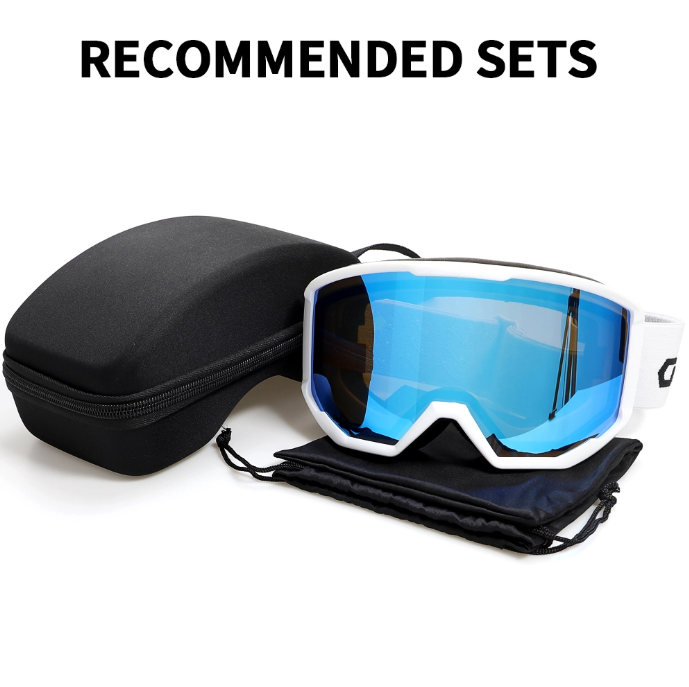
Fogged lenses can interrupt a ride or a day on the snow quickly. Warm, moist air meets a cooler lens surface, leaving droplets that scatter light. Cyclists may struggle to read road conditions, while skiers can lose sight of terrain and nearby people.
For athletes who wear corrective glasses, the problem involves another fogging surface. Buyers sourcing anti fog prescription sports goggles should therefore examine how the outer goggle, ventilation, and prescription eyewear work together. The goal is not a clear product photograph, but usable vision during activity.
Why Different Sports Create Different Fogging Conditions
Cycling produces changing airflow. During a climb, riders move slowly and perspire heavily; during a descent, colder air reaches the face quickly. A close-fitting frame may reduce wind exposure, yet moisture can accumulate when vents are blocked by equipment.
Winter sports create a different sequence. Snow goggles move between cold outdoor air, warm indoor areas, and damp lift queues. Breath escaping above a face covering can enter the frame. Moisture trapped near the face may condense when the lens temperature drops, without heavy sweating.
These conditions matter during product selection. Procurement teams should ask suppliers how ventilation works at low speeds, whether a helmet changes airflow, and which lens surfaces carry anti-fog treatment. Claims about performance should be supported by a stated test method rather than vague claims.
Prescription Compatibility Needs Careful Checking
Prescription support can mean different things. Some eyewear uses lenses made to an individual prescription. Other goggles are designed to fit over ordinary corrective glasses, commonly called over-the-glasses, or OTG. These arrangements should not be described as interchangeable because fit and cleaning differ.
With an OTG design, glasses sit inside the goggle frame. Buyers should verify the internal clearance, temple space, and stability during movement. Pressure on the glasses can cause discomfort, while contact between lenses may make scratches or condensation harder to manage.
For anti fog prescription sports goggles, checking only the outer lens misses a common problem: the prescription glasses underneath may still fog. Suppliers can help buyers evaluate this by providing fitting dimensions, lens-care instructions, and practical wear tests with representative frames. Field of view also matters.
Lens Construction and Ventilation Work Together
Anti-fog coatings and lens structures address moisture in different ways. Treatments are intended to reduce droplet formation or spread moisture. A dual-layer lens can help limit temperature differences across the inner surface. Both still require airflow and care.
Vent position matters as much as vent size. Openings should allow humid air to escape without creating excessive wind exposure. Foam, helmet edges, scarves, and face masks can change that pathway. Product testing should reflect the equipment combinations athletes actually use during stop-and-start activities.
Buyers comparing anti fog sports goggles should request details about lens structure, coating location, and recommended cleaning methods. Harsh wiping or unsuitable chemicals can damage some treatments. Written care guidance is valuable for retailers and clubs to help customers preserve performance.
What Product Evaluation Should Cover
A useful evaluation starts with visibility, not appearance. Teams can inspect optical clarity, distortion, field of view, and peripheral obstacle recognition. For winter models, sample trials should include cold-to-warm transitions and repeated use with helmets and face coverings.
Cycling models deserve separate trials. For anti fog sports goggles, airflow and visibility should be evaluated together. Riders need stable fit over uneven roads, manageable airflow, and appropriate sun protection when specified. Polarized lenses can reduce some reflected glare, but may affect the visibility of certain screens. UV400 claims and impact protection should be checked against documentation for each model.
For wholesale purchasing, testing one sample is only the beginning. Buyers should review batch inspection procedures, acceptable defect criteria, packaging protection, and arrangements for handling quality issues. Suppliers should receive identical test conditions. For club orders, managers can also record helmet types, eyewear dimensions, and weather conditions during trials. Such records make feedback easier to compare across users.
How Manufacturing Choices Affect Wholesale Orders
Customization can involve logo placement, frame colors, packaging, and changes to product construction. Tooling and approvals vary. Before placing a purchase order, a brand should distinguish stock-item decoration from development work requiring drawings, molds, or verification.
YIJIA Optical is a sports eyewear manufacturer offering OEM and ODM work, from concept and 3D design through tooling, samples, and finished production. Their stated capabilities include lens transmittance, impact, and anti-fog testing equipment. This supports documented sample reviews.
Their ski goggle models YH879C and YH682 are described for winter sports and OTG use. Buyers considering anti fog sports goggles can ask for model-specific drawings and anti-fog test information. The factory states that samples can ship in seven days and bulk production takes around 25–30 days; confirm timing for each order.
A Practical Basis for Supplier Decisions
Retailers, clubs, and eyewear brands should make procurement decisions using fit measurements, lens documentation, user trials, and clear inspection criteria. The term anti fog prescription sports goggles is useful for identifying a need, but buyers still have to establish whether a proposed product accepts glasses underneath or incorporates prescription lenses.
When comparing offers, buyers can ask YIJIA Optical for a sample plan, the applicable test documents, and customization requirements. Apply consistent acceptance criteria across suppliers. This emphasizes visibility, quality, and delivery commitments.
